
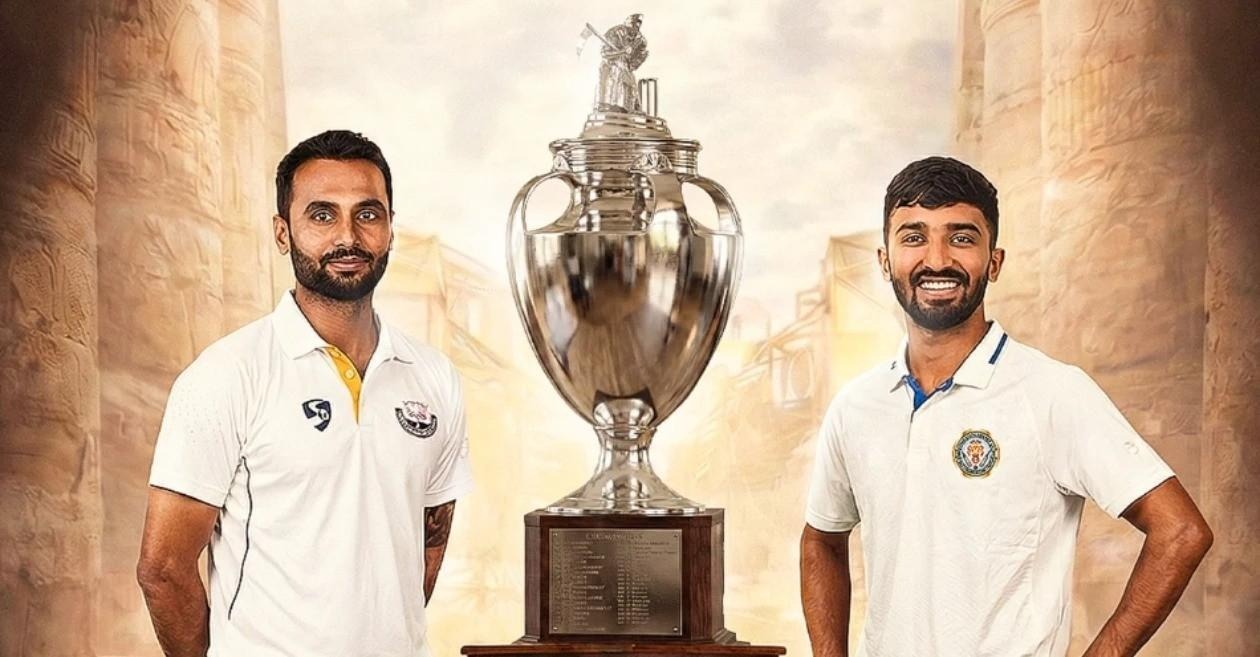
The Plate Group is the lower division of the Ranji Trophy, India’s premier domestic first class cricket competition. It gives teams outside the Elite division a separate league to compete in, with a route to promotion based on their performance.
The division also provides emerging cricketers with regular first class opportunities. Its format, participating teams and promotion rules have changed over the years, making it an important part of the Ranji Trophy structure.
What Is the Plate Group in Ranji Trophy?
The Plate Group is the lower division of the Ranji Trophy, separate from the 32 teams competing in the Elite division. For the 2026-27 season, six teams play in one Plate group, with each side scheduled to face the other five once in the league stage.
The Plate competition has its own title and final. Its champion earns promotion to the Elite division under the current promotion system. This gives teams a competitive target while providing their players with valuable experience in multi day cricket.
Which Teams Play in the Ranji Trophy Plate Group in 2026-27?
The 2026-27 Ranji Trophy Plate Group features six teams:
| No. | Team |
| 1 | Arunachal Pradesh |
| 2 | Manipur |
| 3 | Meghalaya |
| 4 | Mizoram |
| 5 | Nagaland |
| 6 | Sikkim |
These teams compete in a single group. Each side plays five league matches against the other participating teams.
The team list can change between seasons because of promotion and relegation. Bihar moved into the Elite division after winning the 2025-26 Plate competition, while Nagaland entered the Plate division after relegation.
How Does the Ranji Trophy Plate Group Format Work?
The Plate Group has six teams, with each side playing five league matches. However, its knockout structure has not remained the same in every season. The 2025-26 competition used a top four knockout format, while the BCCI’s published 2026-27 schedule lists five league matches per team followed by one Plate final.
Here is how the 2026-27 structure is organised:
- Six participating teams: All six teams compete in one Plate group.
- Single round robin: Every team faces the other five sides once.
- Five league matches: Each team plays five matches during the league stage.
- League standings: Teams are ranked according to their points and the applicable tie breaking criteria.
- Plate final: The published BCCI format provides for one final after the league stage.
- Promotion: The Plate champion earns promotion to the Elite division for the following season.
The BCCI’s 2026-27 ready reckoner lists one Plate final, rather than the four team semi final and placement playoff structure used in 2025-26.
How Did the Plate Knockout Format Work in 2025-26?
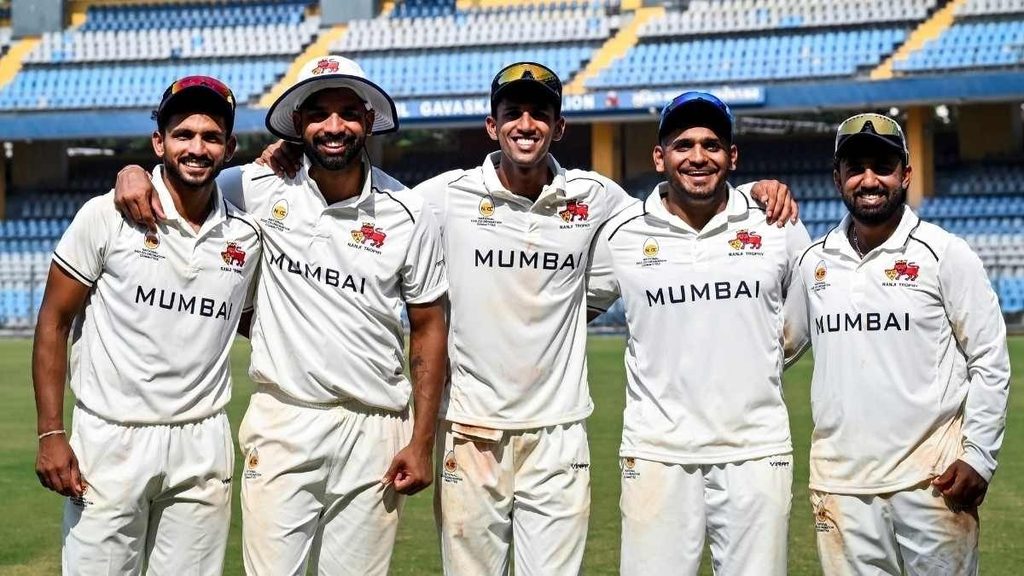
Source: mykhel
The 2025-26 season used a different knockout arrangement. The top four teams from the Plate league qualified for semi finals, while the bottom two teams played a match to determine fifth and sixth place.
The two semi final losers also played a placement match for third and fourth place. The winners of the semi finals contested the Plate final. This format gave four teams a chance to compete for the title rather than sending only the top two directly into a final.
What Is the Difference Between the Elite Group and Plate Group?
Both divisions are part of the same Ranji Trophy competition, but they differ in the number of teams, league matches and knockout arrangements.
| Feature | Elite Group | Plate Group |
| Total teams | 32 | 6 |
| Group structure | Four groups of eight | One group of six |
| League matches per team | 7 | 5 |
| League format | Single round robin within each group | Single round robin |
| 2026- 27 knockout structure | Four quarter finals, two semi finals and one final | One Plate final |
| Main objective | Qualify for and win the Ranji Trophy | Win the Plate title and earn promotion |
The Elite division has a longer league stage because it contains more teams. The top two sides from each Elite group qualify for the main Ranji Trophy quarter finals.
The Plate division has a shorter league competition. Its teams compete for the Plate title and the opportunity to move into the Elite division.
How Can a Plate Group Team Get Promoted to the Elite Group?
Promotion gives a Plate team the opportunity to compete in the higher division in the following Ranji Trophy season. Under the published 2026- 27 arrangement, the Plate champion earns promotion, while the last placed Elite team is relegated.
The process works as follows:
- Perform in the league stage: A team must collect points across its five league matches.
- Finish at the top: Teams compete for the leading positions in the Plate standings.
- Win the Plate final: The team that wins the final becomes the Plate champion.
- Earn Elite promotion: The Plate champion moves into the Elite division for the next season.
- Relegation from Elite: The last placed Elite team moves into the Plate division.
Bihar is the latest example of promotion. The team won the 2025 26 Plate competition and moved into the Elite division for 2026-27. Nagaland moved in the opposite direction after being relegated.
How Have the Promotion Rules Changed?
The promotion and relegation arrangement has not always involved the same number of teams. In 2024-25, both Plate finalists earned promotion, while two Elite teams were relegated. Goa and Nagaland were the two promoted teams after reaching the Plate final.
The current 2026-27 arrangement is one up and one down. The Plate champion earns promotion, while the last placed Elite team moves into the Plate division. This makes the Plate title the key route to the higher division.
Why Does the Ranji Trophy Have a Plate Group?
The Plate Group gives teams outside the Elite division a meaningful domestic competition. It allows state and regional teams to play regular first class cricket while competing for promotion.
Here are some important reasons for having the division:
1. More Opportunities for Emerging Players
Plate matches give young cricketers regular opportunities to play multi day cricket. They can develop their batting, bowling, fielding and match management skills against other competitive teams.
Bihar batter Sakibul Gani provided one of the most remarkable examples in 2021 22. He scored 341 runs against Mizoram in his first class debut match, becoming the first batter in cricket history to score a triple century on first class debut. The innings came in a Ranji Trophy Plate Group fixture.
2. A Pathway to the Elite Division
The promotion system gives Plate teams a clear target beyond winning individual matches. A successful campaign can take a team into the Elite division, where it faces some of India’s established domestic sides.
Bihar’s promotion for 2026-27 is a recent example of this pathway.
3. Competitive Matches for Regional Teams
The Plate Group brings teams together in a separate league, giving them regular opportunities to compete against one another. This can help players gain experience and give regional cricket associations a platform to build stronger squads.
Mizoram batter Taruwar Kohli demonstrated the quality of performances possible in this division when he scored an unbeaten 307 against Arunachal Pradesh in the 2019 20 Ranji Trophy season.
4. Milestones in Domestic Cricket
The Plate competition has also been the setting for important individual milestones. In December 2019, Vinay Kumar took his 400th Ranji Trophy wicket while playing for Puducherry against Bihar. He finished the match with four wickets in the second innings and reached 401 Ranji wickets.
These performances show that the Plate division is not just a route to promotion. It has also provided a stage for major individual achievements in Indian domestic cricket.
Which Teams Won the Ranji Trophy Plate Group in Recent Seasons?
Goa won the 2024-25 Plate final against Nagaland, while Bihar won the 2025-26 Plate competition and earned promotion to the Elite division.
| Season | Plate Champion | Runner up | Key outcome |
| 2024-25 | Goa | Nagaland | Both finalists earned Elite promotion |
| 2025-26 | Bihar | Not listed here | Bihar earned Elite promotion |
Goa defeated Nagaland by 362 runs in the 2024-25 Plate final. Goa batter Snehal Kauthankar played a major role in the victory, scoring 202 not out in the first innings and earning Player of the Match.
The 2019 20 season also shows how the division has changed over time. Its Plate Group had ten teams, compared with the six teams in the 2026-27 competition.
What Is the Current Ranji Trophy Plate Group Standings in 2026-27?
The 2026-27 Ranji Trophy began on 11 October 2026. As of 30 October, Manipur are at the top of the Plate standings with 12 points, ahead of Meghalaya on net run rate. Sikkim are third with nine points.
| Position | Team | Points |
| 1 | Manipur | 12 |
| 2 | Meghalaya | 12 |
| 3 | Sikkim | 9 |
| 4 | Nagaland | 7 |
| 5 | Mizoram | 4 |
| 6 | Arunachal Pradesh | 0 |
The Plate league is being played in two phases. The first phase runs from 11 October to 5 November 2026, and the remaining league fixtures are scheduled for 17 to 20 January 2027. The Plate final is scheduled in the 24 to 28 January knockout window.
The next round of Plate fixtures is scheduled for 2 to 5 November 2026. Manipur, Meghalaya, Sikkim, Nagaland, Mizoram and Arunachal Pradesh will continue their league campaigns before the January phase.
Can Plate Group Teams Win the Ranji Trophy?
A Plate Group team cannot qualify directly for the main Ranji Trophy knockout stage from the Plate final. It must first earn promotion to the Elite division.
After moving into the Elite division, the team competes in one of the four Elite groups. It can then qualify for the main Ranji Trophy quarter finals by finishing among the top two teams in its group.
This system gives Plate teams a route to the main championship, but they must first establish themselves in the higher division.
Conclusion
The Plate Group is an important part of the Ranji Trophy because it gives six teams a separate first class competition and a route to Elite promotion. In 2026-27, Arunachal Pradesh, Manipur, Meghalaya, Mizoram, Nagaland and Sikkim are competing in the division, with five league matches scheduled for each side.
The format has changed across seasons. The 2025-26 competition used top four semi finals and placement matches, while the BCCI’s published 2026-27 structure lists one Plate final. The division has also produced notable performances, including Sakibul Gani’s world record 341 on first class debut and Vinay Kumar’s 400th Ranji wicket.
FAQs
The Plate Group is the lower division of the Ranji Trophy. Six teams compete in one group, with five league matches scheduled for each team and one Plate final in the published 2026- 27 format.
The six teams are Arunachal Pradesh, Manipur, Meghalaya, Mizoram, Nagaland and Sikkim.
Each team plays five league matches because the group contains six teams and every side faces the other five once. The finalists play one additional match.
Yes. Under the 2026-27 promotion arrangement, the Plate champion earns promotion to the Elite division for the following season.
Not directly. A Plate team must first earn promotion to the Elite division. It can then qualify for the main Ranji Trophy knockout stage by finishing among the top two teams in its Elite group.
Bihar won the 2025-26 Plate competition and earned promotion to the Elite division for the 2026-27 season.
